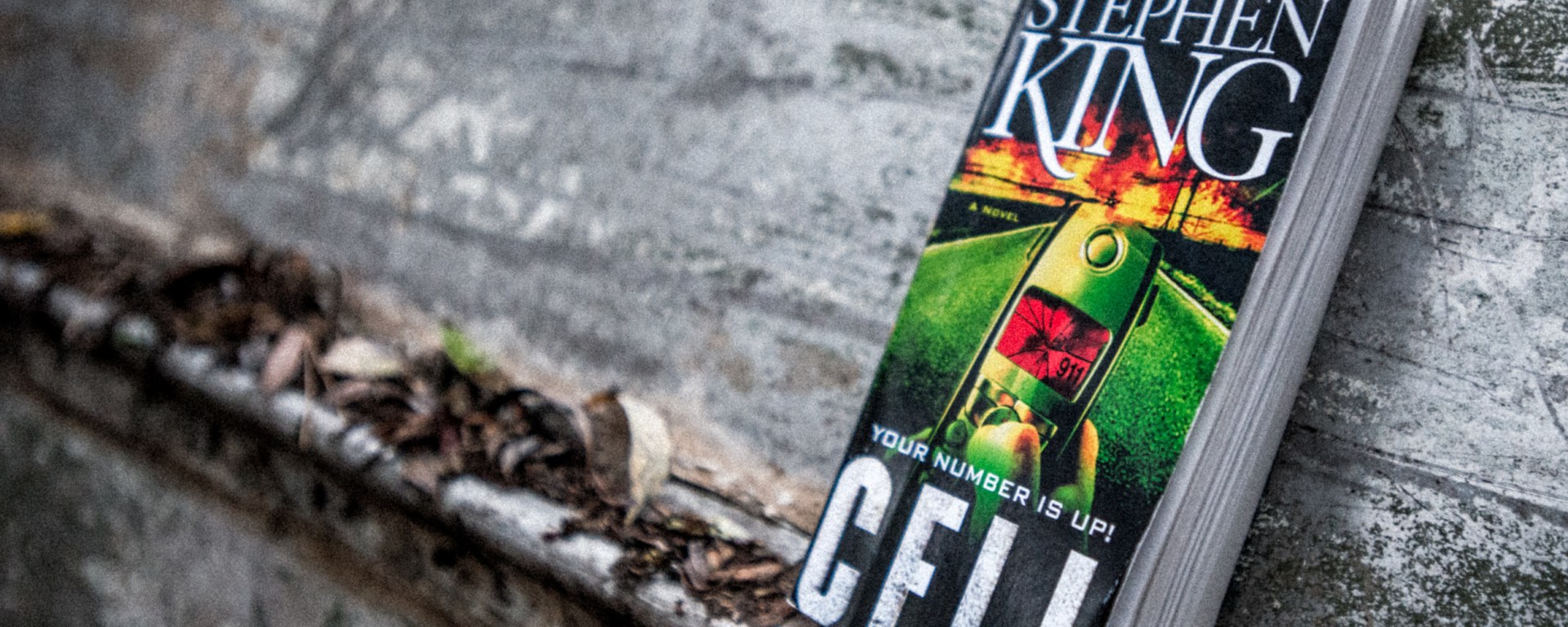
I’m not entirely convinced about this one. As a devoted fan of Stephen King, “The Stand” has always held a special place in my heart as one of the finest post-apocalyptic novels ever penned. It ranks high among King’s masterpieces, a sentiment I’ve held since my first reading in teenage year, which I revisited recently two decades later, I never want the journey to conclude.
Naturally, my anticipation was palpable when I delved into “Cell,” especially given my penchant for zombie fiction.
Yet my enthusiasm was dampened somewhat quickly.
The first half of the novel was certainly an enjoyable read. I loved its fast pace and found myself drawn to the compelling characters, particularly the endearing Tom and resilient Alice. The premise that mobile phones could lead to brain alteration akin to sophisticated computer programming is intriguing and certainly enjoyable to explore.
The novel is filled with familiar suspense, terror, and horror, all hallmarks of King’s storytelling prowess.
The vivid metaphors that King weaves effortlessly into his narrative, such as “His cock swung from side to side like the pendulum of a grandfather clock on speed,” are well represented here.
I loved unsettling yet perhaps truthful portrayal of human nature, encapsulated in the line, “What Darwin was too polite to say, my friends, is that we came to rule the earth not because we were the smartest, or even the meanest, but because we have always been the craziest, most murderous motherfuckers in the jungle.”
However, the second half of the book is a very different beast. From the introduction of the so called Raggedy Man the plot begins to fall apart.
The actions and motivations of both Clay and his cohorts, as well as the “phone-people,” left me confused and wildly disconnected from the narrative.
The lack of believability in stumbling upon zombified loved ones amidst hordes of zombies or miraculously surviving massacres unscathed strained credulity.
Compared to King’s other works I’ve enjoyed, the story felt somewhat lacking, leaving me disappointed and uninterested in even finishing it.
The ending, in particular, left me deeply disappointed, bordering on resentment. After enduring the less enjoyable second half, the resolution felt lazy and unsatisfying. I found myself flipping through the final pages, hoping I’d missed a crucial explanation for Sharon and Johnny’s fates, only to be left feeling cheated.
Stephen, after investing so much in the narrative, how could you leave us hanging like this?
 Booklytical