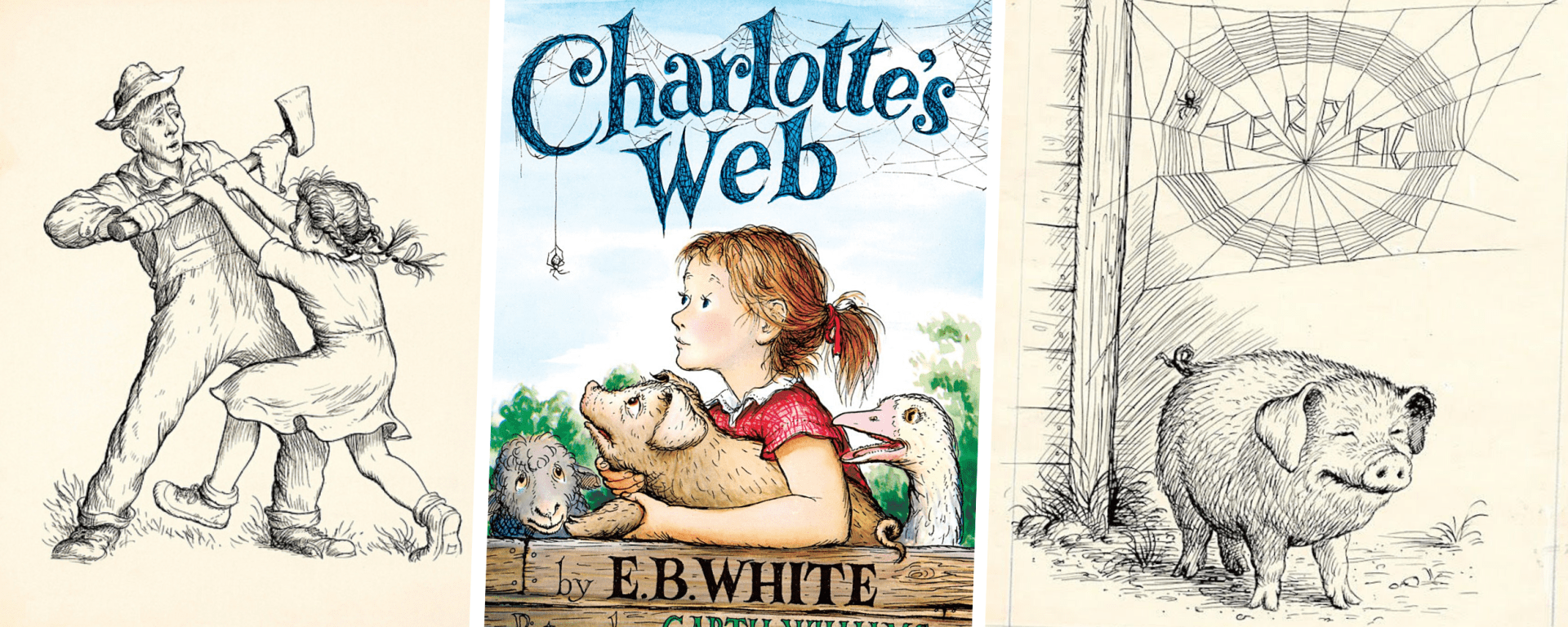
I first read E.B. White’s classic children’s book when I was 11 years old. I thought it was going to be a boring old read, but this brilliant book soon proved me wrong.
From the very first pages, I found myself captivated, drawn into a barnyard world that felt more authentic than anything I had previously encountered in literature. By the time I reached its heart-wrenching climax, tears streamed down my cheeks—the first time a book had ever evoked such a powerful emotional response from me. Since then, the flashy tales of intergalactic voyages and heroic battles that once lined my shelves have paled in comparison.
Two decades later and its potency remains undiminished. It’s a rare story that can bloom twice in the reader’s imagination. Even now, over 70 years years on from its publication, White’s classic, still one of the bestselling children’s books in history, maintains a magical freshness that newer, trendier, and more psychologically driven books simply cannot match.
The narrative itself is refreshingly simple. A young farm girl from Maine, Fern, saves a runt pig from slaughter, raising it until it’s old enough to be sent to a nearby farm owned by Zuckerman. There, the pig, named Wilbur, is fattened for the butcher, only to be rescued once again, this time by a clever spider named Charlotte, who weaves messages celebrating Wilbur’s uniqueness into her webs. Convinced of the pig’s charm, humans honour him with a special prize at the county fair. But tragedy strikes when Charlotte dies after laying her eggs. Despite his grief, Wilbur takes on the responsibility of hatching her offspring, ensuring that Charlotte’s legacy lives on.
Analyzing the appeal of children’s literature can be as tricky as explaining jokes, but certain aspects of “Charlotte’s Web” warrant examination. It stands as one of the most honest books written for young readers, portraying a barnyard world with a candidness that resonates even with urbanites like myself. White’s portrayal of talking animals avoids sentimentality, presenting them with a straightforwardness that prevents saccharine overload.
Templeton the rat, for example, lacks morals, conscience, and kindness, yet remains oddly likeable. White’s depiction of death, a fact of life in Zuckerman’s barn, is similarly unvarnished. His prose mirrors the simplicity and candour of the world he describes, reminiscent of Hemingway had he never left the United States.
White’s obsession with crafting the perfect sentence extends into the story itself, as Charlotte agonizes over finding the right word to save Wilbur. This subtle charm underscores the power of language, prevailing over violence. Through Wilbur’s realization at the story’s end, White emphasizes the rarity of true friendship and good writing.
Once White establishes a foundation of realism, he delves into his deeper purpose—revealing the wonders inherent in everyday life. It’s the small miracles on the farm that captivate, from Charlotte’s messages in her webs to the sight of her offspring borne away on silk balloons. White taps into the youthful imagination by highlighting the extraordinary within the ordinary, reminding us of the magic we often overlook as adults.
But perhaps White’s most remarkable feat is his portrayal of life emerging from death. He confronts mortality with unflinching honesty, a topic often deemed too sensitive for children’s literature. Yet, White handles Charlotte’s death with a blend of sorrow and redemption, ultimately leaving readers with a bittersweet but uplifting conclusion. It’s a testament to White’s genius that he can navigate such delicate themes with grace, crafting a narrative that resonates with both children and adults alike.
 Booklytical