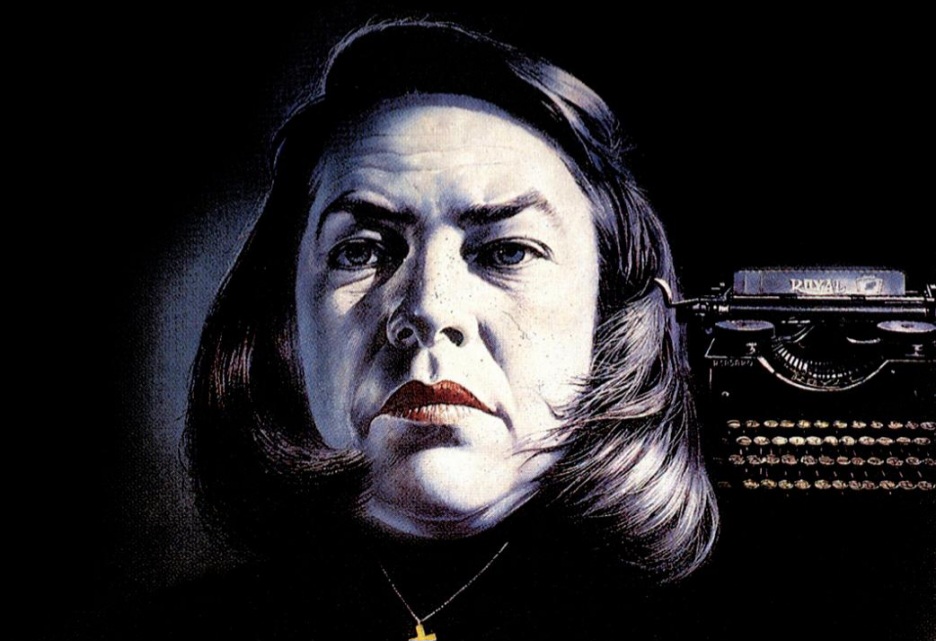

Stephen King has consistently been my go-to supplier for all things literary horror. Having immersed myself in roughly a third of his extensive body of work, each novel has been a captivating journey into the depths of fear. While I’ve generally relished these experiences, few have genuinely unsettled me—exceptions being “Revival,” “IT,” and now, “Misery.” This book, in particular, had the power to induce nightmares as its events, though improbable, remained disturbingly plausible.
The narrative predominantly revolves around two characters—Paul Sheldon, a severely injured writer, extraordinaire, and Annie Wilkes, a former nurse and Paul’s self-proclaimed number one fan. When Paul endures a harrowing car accident during a snowstorm, Annie, discovering him, chooses an unconventional path. Instead of rushing him to a hospital, she takes him to her home, assuming the role of his caretaker. As the plot unfolds, Paul regrets not succumbing to the impact, and these two characters, dominating the narrative, demand a closer examination.
Annie Wilkes emerges as perhaps the most terrifying villain in King’s repertoire, devoid of supernatural elements, which amplifies her dreadfulness. King’s description of her as unnaturally solid, like an idol from some ancient civilization, instills a profound sense of disturbance. I entertain the notion that if Annie Wilkes and Pennywise were to cross paths in some shadowy alley, the sometimes-clown would flee in mindless terror. She embodies a deeply disturbed persona, and her presence strikes fear into the heart of any artist, fearing the emergence of such an obsessive fan. However, at times, her enraged manner of speaking became a challenge for me to endure, overshadowing the overall experience and preventing the book from reaching a 4.5-star rating.
In contrast, Paul Sheldon represents an embodiment of some of King’s deepest fears, reflecting the anxieties shared by many artists. The fear of being ensnared by one’s creation, compelled to replicate the same popular story repeatedly, resonates strongly. Paul, a successful author, takes a daring step by killing off his cash cow, aiming for a more distinguished path. This mirrors instances in literary history, such as Sir Arthur Conan Doyle’s decision to part ways with Sherlock Holmes, only to resurrect him due to public demand. Sheldon’s struggle, though on a smaller scale, carries a deadly weight as he grapples with the consequences of his artistic choices.
Throughout Sheldon’s character development, King repeatedly emphasizes the core motivation for writing: a personal journey for the author. Despite the compelling and disturbing plot, what resonated the most with me in this book was King’s raw honesty about himself, as mirrored through his protagonist. The insights into writing and the author’s life were unexpectedly impactful and moving, revealing a vulnerability that added a layer of authenticity to the narrative. King’s openness in allowing himself to shine through even in his most disturbing fiction felt like a genuine gift to the readership.
“Misery” surpassed my expectations, standing out as one of my 6 from King. Its terror, grounded in realism, eclipses even his more supernatural works. Moreover, the reflections on writing, the elements of a compelling story, and the perils of attracting radical fans linger in my thoughts. If I ever achieve fame as a writer or musician, the phrase “I’m your number one fan” will likely evoke dread, instigating a desire to retreat from the spotlight. The allure of anonymity suddenly seems significantly safer.
 Booklytical